


Well, there it is.
The tension we laid out last Wednesday has proved irreconcilable.
Iran wants nukes and control over the Strait. Trump cannot allow either. The two circles of the Venn diagram sit far enough apart that Israel’s war on Lebanon didn’t even make the agenda.
I won’t claim I called this perfectly, but we may finally be in the mid-game. This isn’t something that gets called off in an afternoon. The question is fundamental: who controls the most important waterway in the world, and does Iran’s willingness to threaten its neighbors give it enough leverage to negotiate its way to a nuclear weapon?
That’s the crux.
What’s becoming clear is the strategy. And for those who’ve been reading along, from “War for the Dollar“ through “Don’t Take the Bait“ through “Waking the Hegemon“ and “The Fragile Peace,” the pattern should be recognizable by now.
Trump is running the Rimland playbook.
Interdict the ships. Threaten 50% tariffs on anyone supplying weapons to Iran. Bring China into the conversation not by invading the heartland, but by controlling the water their energy flows through. For every ship they mine, for every tanker they hit, seize a ten of theirs. Park the carriers, commandeer the tankers, sell their crude. In dollars.
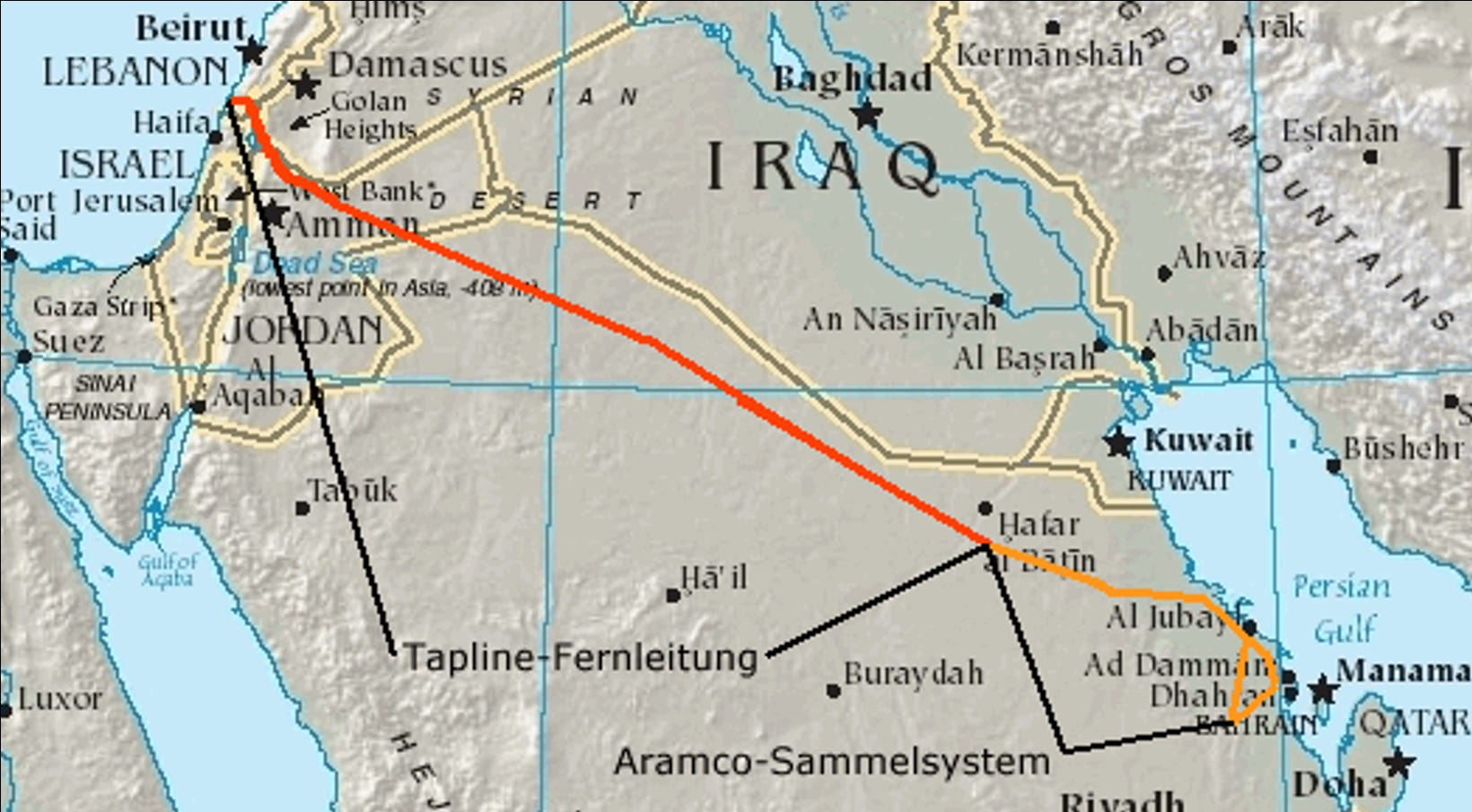
And then the Abraham Accords. Saudi oil flowing through Jordan to Haifa. The Tapline reborn. A physical corridor connecting the coastal states into an energy network that bypasses the heartland entirely. Rimland coalition infrastructure built in pipe and steel. By my account, the reason we are in this mess (Iran/China acting via Hamas on October 7th to trigger Israel and derail the normalization of relations which would then provide alternative routes for trade outside of Hormuz/BRI).
This helps explain the gap between Washington and Brussels. The US feels the weight of responsibility. Europe appears to believe it can cut side deals for its energy while the younger brother fights its battles. France blocked the UNSC resolution, negotiated bilateral passage through the Strait, and called for a “coalition of independents.” Classic heartland thinking: cut a deal with the interior, avoid the fight, pretend the sea lanes maintain themselves.
Trump just closed that loophole. And in doing so, made America’s problem the world’s.
As of writing, crude is back up 6%+, stocks are down 1%, and the ceasefire gains from last week look extremely likely to unravel. I bot some VIX calls late last week, so call me biased.
How much depends on a series of first-order questions about how far this escalation goes:
Can the ceasefire hold for another week, or does backward induction lead to resumption?
Trump has promised to interdict ships that paid Iranian tolls. Does that include Chinese vessels? What happens when they try to pick up crude from Kharg?
He’s also reiterated the 50% tariff threat on any country supplying weapons to Iran. Is the trade war back on the menu?
Then there’s the counter-move. Iran activates the Houthis, who still appear capable of making Bab el-Mandeb impassable. Worth noting: the majority of tankers lifting Saudi barrels from the East-West pipeline are VLCCs too large for Suez. A Houthi escalation doesn’t just threaten Red Sea traffic. It forces the long route on the biggest ships carrying the most critical barrels.

The through-line is that this conflict continues to grow in scale and scope. By widening to a total interdiction of toll-paying ships and reiterating tariffs, Trump has brought China squarely into the conversation. Beijing has been stockpiling crude for years for exactly this scenario. But given the economic drag from the property hangover, how long can Chinese markets stay sanguine? How likely are they to escalate to defend their energy supplies? The sequencing — Venezuela, then Iran — looks increasingly strategic.
Rimland returns.
The second-order market questions follow directly:
How bad is Monday morning? The first leg down was fast money and retail put buying. At what point do real money investors decide the vol is unmanageable and puke, or hit risk limits?
Last week saw hedge fund pods rush back into long AI hardware, short software. As oil rallies, bonds sell off, tightening liquidity. Combined with supply chain risks around Gulf helium, a critical input in chip fabrication. Is this enough to force a reprice of the AI acceleration timeline?
US growth was basically flat in Q1 going into the conflict. As energy prices surge, disposable income gets pulled into gasoline, heating, jet fuel. Will households cut spending or lever up?
The Fed minutes revealed the board is already discussing tightening to contain the inflationary impact of higher energy. Expect a fresh round of debate about the appropriate response to a negative supply shock. Can the Fed “look through” an energy shock of this magnitude?
All of which brings us to the cascade. The rimland strategy addresses energy and the dollar. It does not address what energy feeds. The market is pricing the first node. It has not yet connected the second. Oil reprices on headlines. Agricultural calendars don’t. Urea is still at $700. The USDA’s smallest planned wheat crop since 1919 doesn’t reverse because two diplomats shook hands. Farmers who couldn’t afford fertilizer in March aren’t retroactively applying it in April.
Tomorrow we go deep on ags. The supply and demand picture, what’s already baked in, and where the market is still mispricing the cascade.
Disclaimers
Good note but
..I feel too creative to think Trump has a plan/ playing 5D chess….
he wants out of a bad trade, back to the ballroom, and UFC on WH lawn this Summer
Damn, Campbell. You on fire!