


In the coming weeks and months we’ll be rebuilding the portfolio from scratch. While we were out, Leo got liquidated by margin debt, so call it a theme. Ours was owing to various compliance and ethics regulations rather than prime brokers, but a forced seller is a forced seller. Perhaps the worst part of the hiatus was leaving you readers in the lurch, holding sugar options, wondering “should I roll?”
We’ll also do a retrospective on some of the more prominent views, positions and strategies from earlier in the year.
Today though, we’re going to look at the world from a clean sheet of paper and ask what is actually happening right now, and what exposures, concerns and risks we should care about. Call it a conversation about strategic asset allocation, call it throat clearing, but away we go.
If I had to boil down the core view, the thing I’d be willing to make a series of 5yr bets on, it’s the consilience of three themes. (Consilience: E.O. WIlson’s fancy word for “it’s all connected, man.”) Each is rising in prominence, and they’re far more connected than folks appreciate:
The AI Acceleration
The Death of Globalism
The Reindustrialization of the West
Online you’ll find plenty of people obsessed with one, maybe two of these. What we haven’t seen in the popular takes is that they’re three lenses on the same transformation. The link is power. If the machines are the most powerful thing we’ve ever built, then the ability to make them, the compute, the chips, the minerals underneath, becomes existential. For anyone with a pdoom above 0.5%, that stops being a portfolio question and becomes a survival one.
The machines woke up, and with them comes the substitution of even more human labor with energy and sand. Part of a long, storied transition of productive substitution going back to the first ox that pulled the first cart.
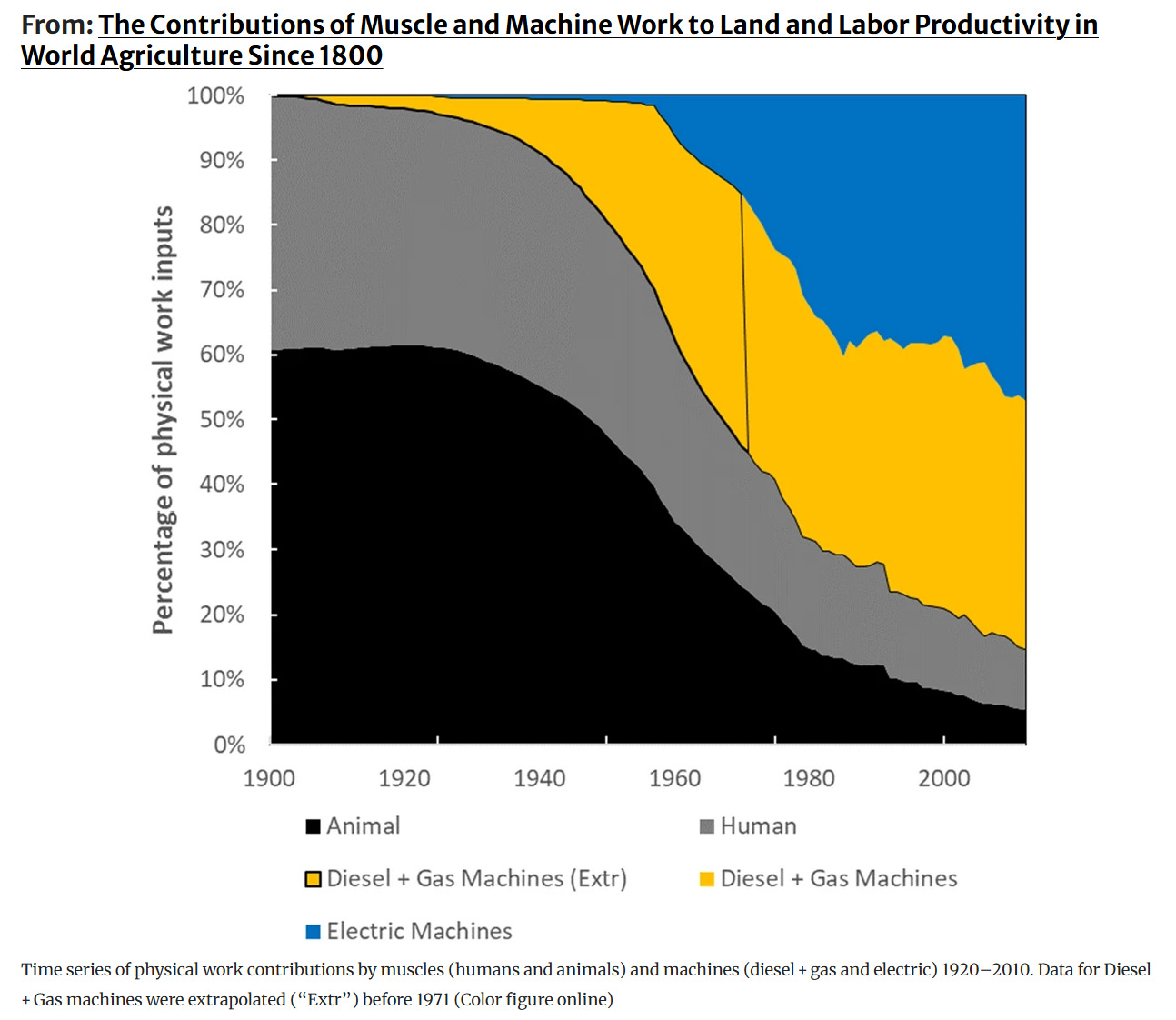
Of our three themes, this is now the most staid. We’ll do a separate piece on the SF-style predictions of 20% growth (nominal? real? funny how they never pick), but even if you don’t buy supernormal growth, this time is at least a bit different.
The other two are where the rubber meets the road. They’re the same singularity, seen from a local, physical, national perspective.
Why? Because every time a technology this powerful shows up, it rewires every social, technological, political and national linkage it touches. The printing press broke the Church’s monopoly (with the caveat that there have been schisms as long as there’s been a Church). Radio made the mass propaganda and mobilization of WWII possible. The internet killed the community. Pick your metaphor, but every email job, and a lot of the jobs picking things up and putting them down, is about to get strange. So is the way countries fight and win wars.
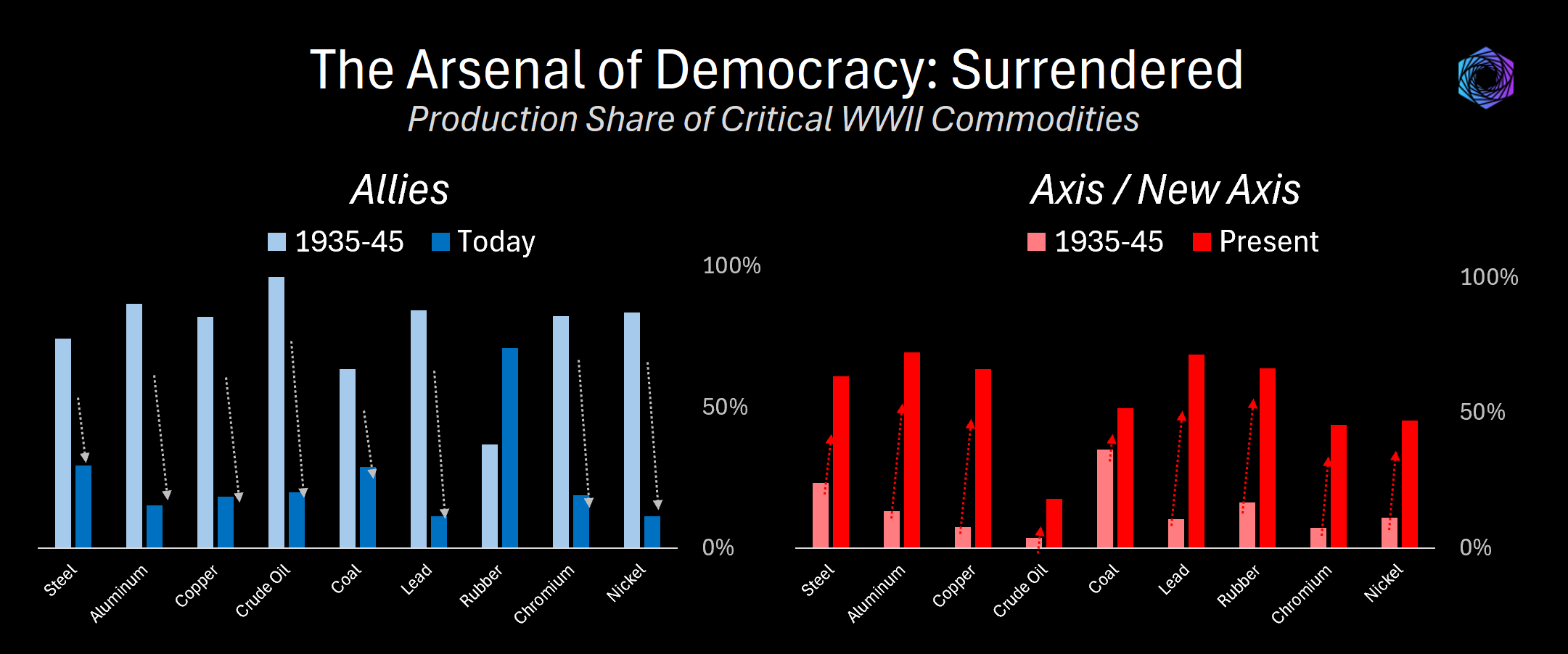
And if the machines decide how wars get won, then whoever can build the machines decides who wins. Meanwhile the West is only now waking up to the notion that shipping your entire manufacturing and raw material supply chain to your greatest geopolitical competitor for a 20% cheaper Vizio flat screen is... unwise.
Keeping that up now that the machines are awake seems downright foolish.
Hence the death of globalism. Globalism here stands in for the post-Cold War Washington Consensus, which imagined a hegemonic, conflict-free world of trade between nation states, where problems got solved with current and capital accounts rather than boots on the ground. Whether or not things go hot in the Pacific, you only need to look at Eastern Europe and the Gulf to see the Clinton and Bush era order is done.
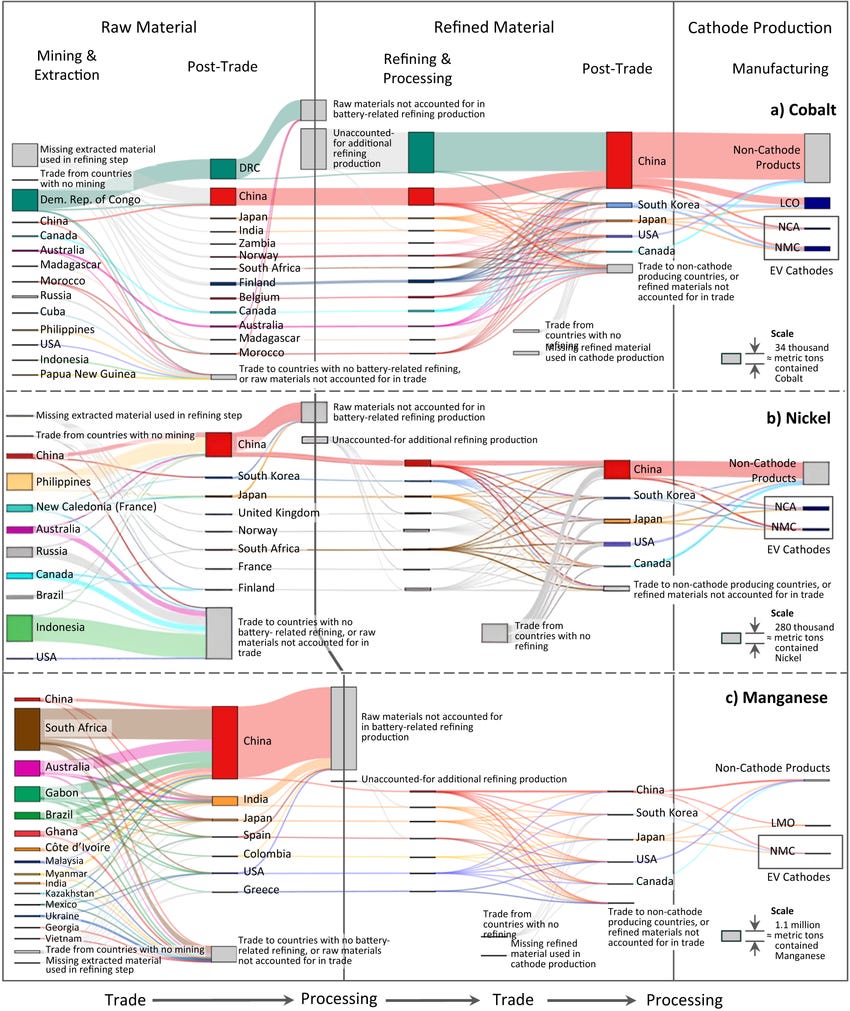
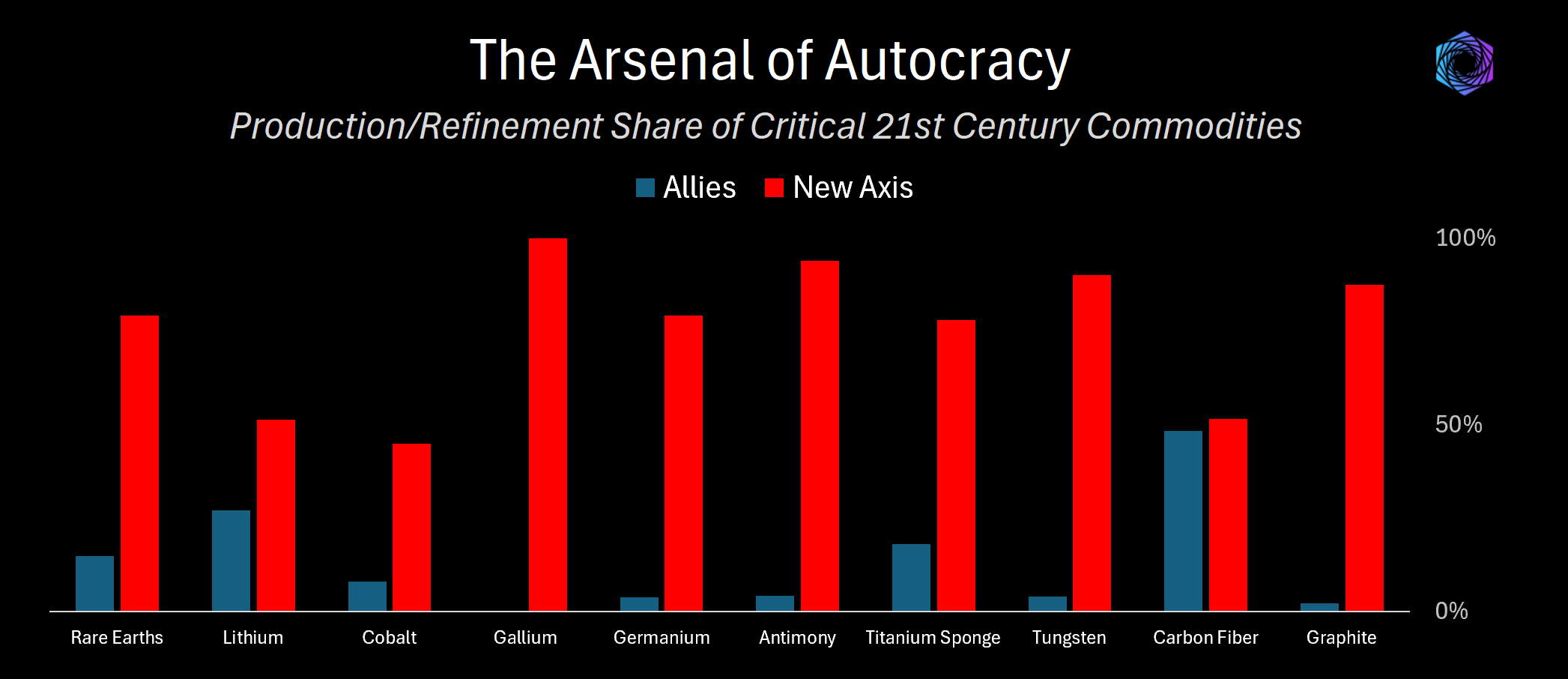
Which demands the West reindustrialize. Not just GPUs and chips, not just brushless motors and PCBs, but the entire stack, all the way down to how we find, extract and refine the kooky minerals that feed all those Factorio production chains.
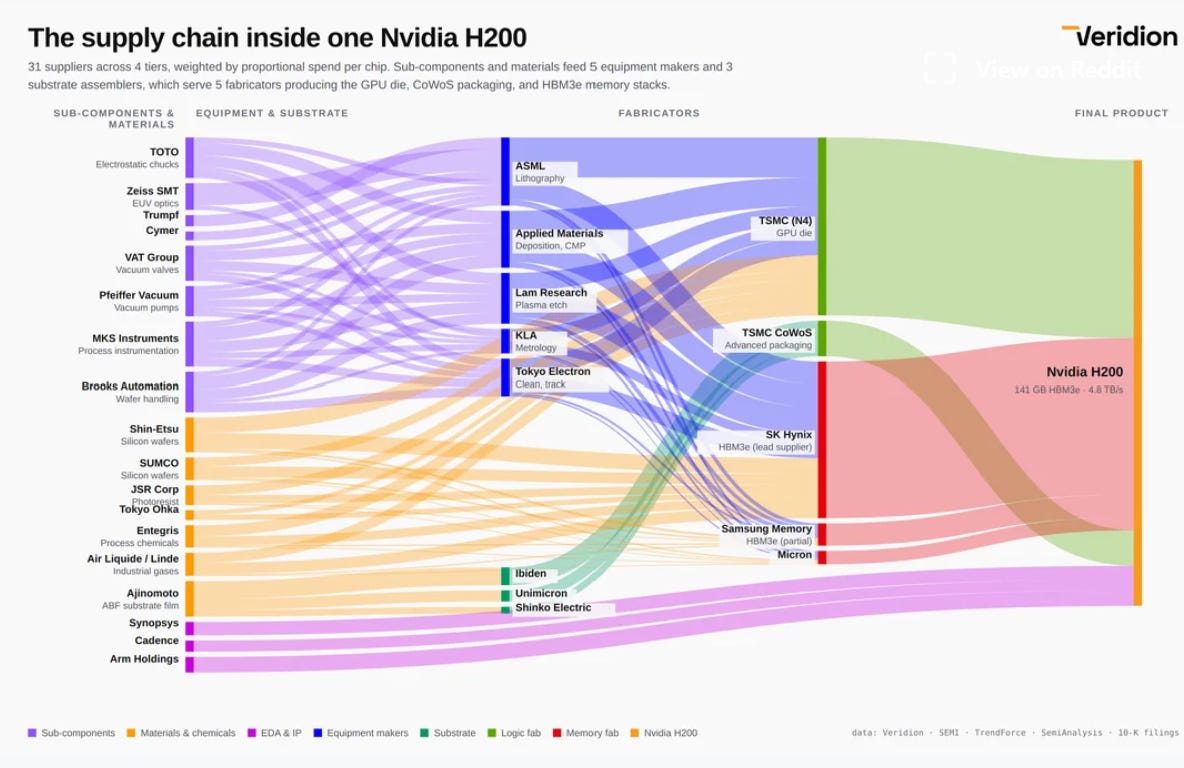
If an F-35 canopy can take an unscheduled vacation in Hong Kong, what do you think happens to your tungsten and gallium when things get spicy?
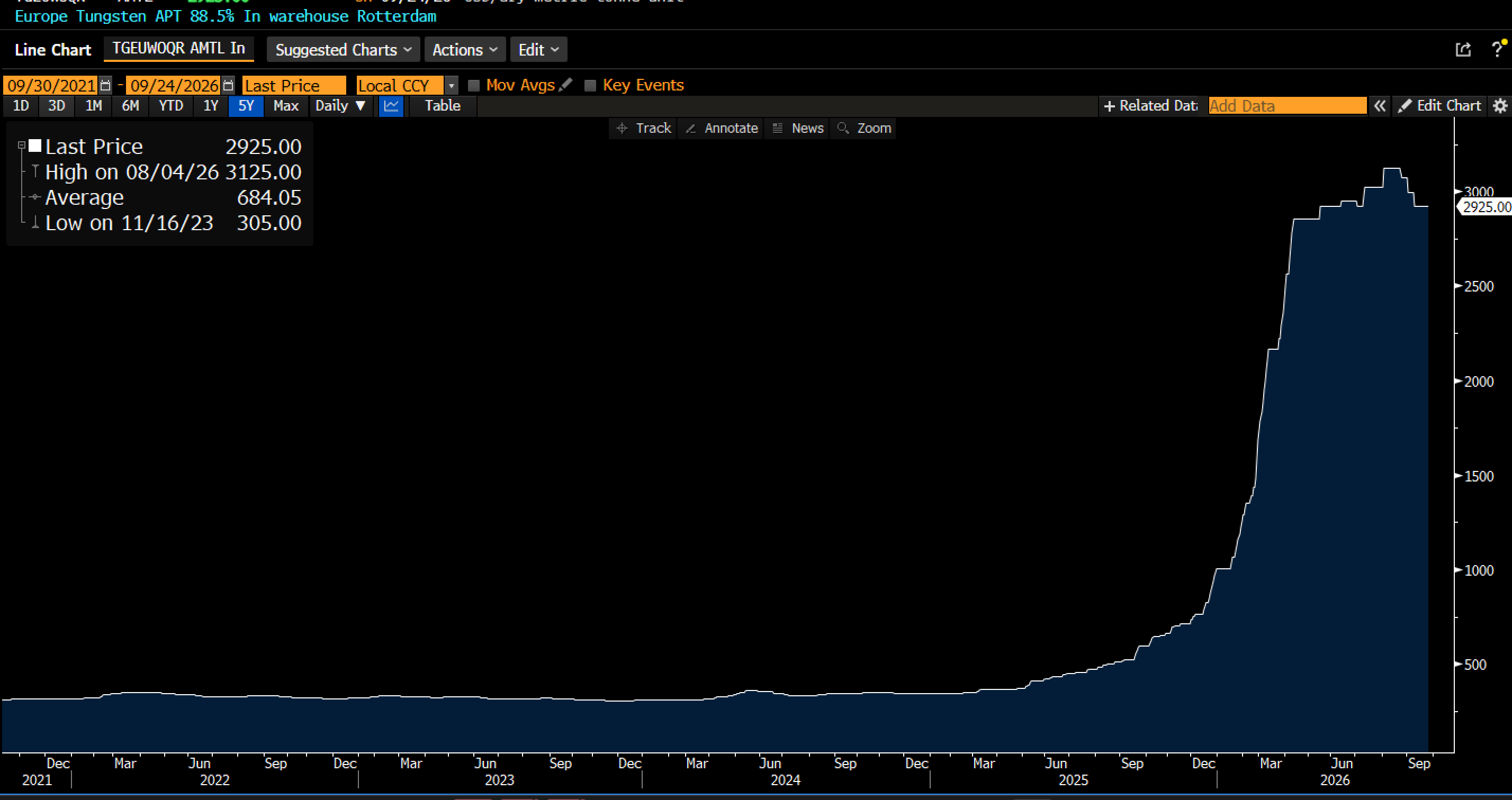
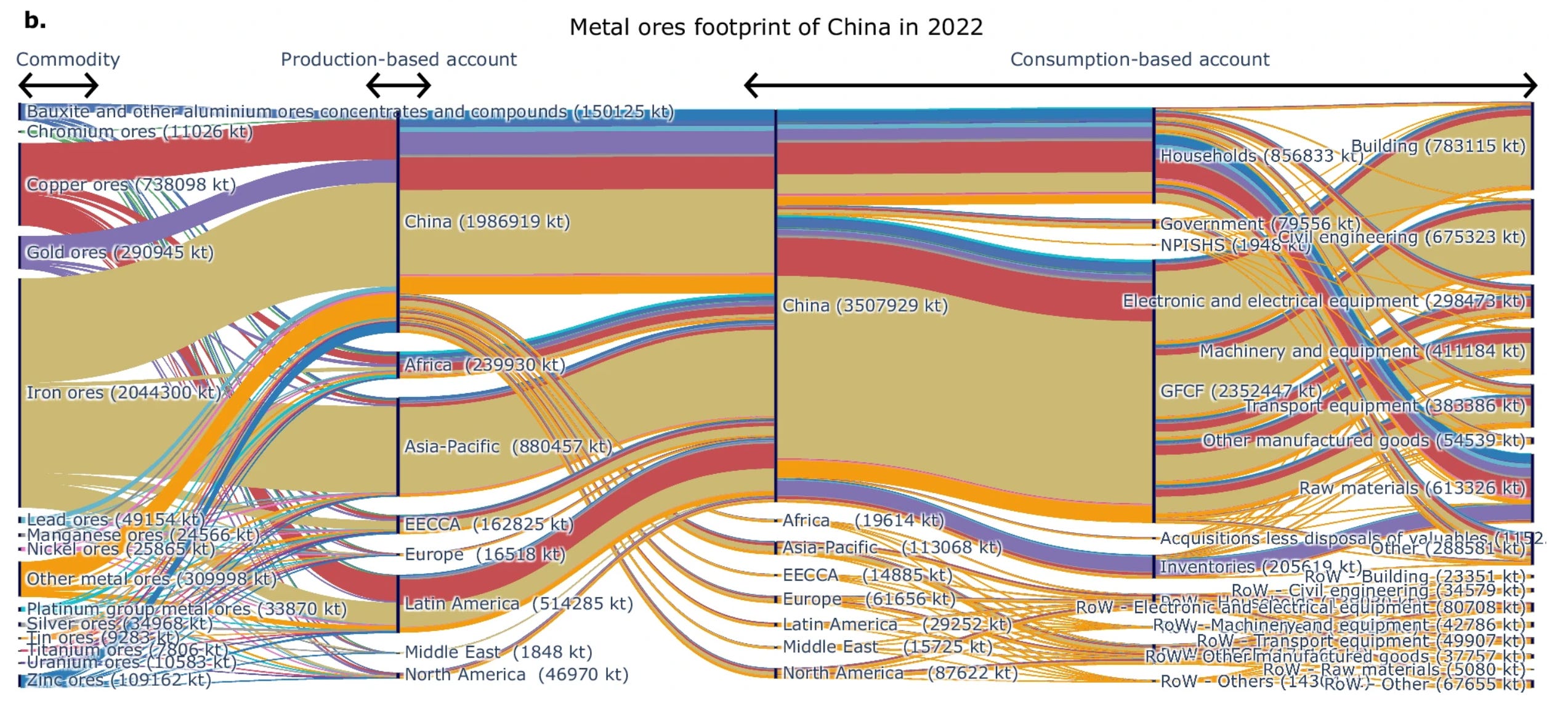
So while most people are fixated on the AI infrastructure build, what interests me is the process underneath it, the renewal and reindustrialization of the physical base.

You’ll hear plenty of people defend the old ways. A world where nations didn’t need borders, and it felt normal to let your adversary disassemble your industrial base and ship it home, not as reparations after a war but in exchange for an endless stream of plastic slop for our shops and homes.
Me? I’m looking for every way I can to buy compute, machines, and the land and minerals that grow them. Next time we start building the portfolio, public and private, that expresses this view.
Over the break I got that process going by taking out a fixed-rate mortgage to buy some land, now 125bps below spot. Sometimes the best way to sell bonds is to borrow a lot of money. Just try not to get overlevered. Ask Leo. The Fed is, after all, tightening, and the goal of tightening, always, is to raise the cost of capital right when it feels most free, to acid test the most aggressive world views against the spreadsheet calculus of cash flows. The singularity may be here, but the capital cycle is immortal. And all that compute is anything but free.
Waiting your suggestions
One thing, remember that not all your followers are Futures practitioners or Options experts. Please provide some more explanation/guidelines for those of us who need a little more "instruction".
Looking forward to the rebuild from scratch especially now.