Not sure if you heard, but looks like we solved math.
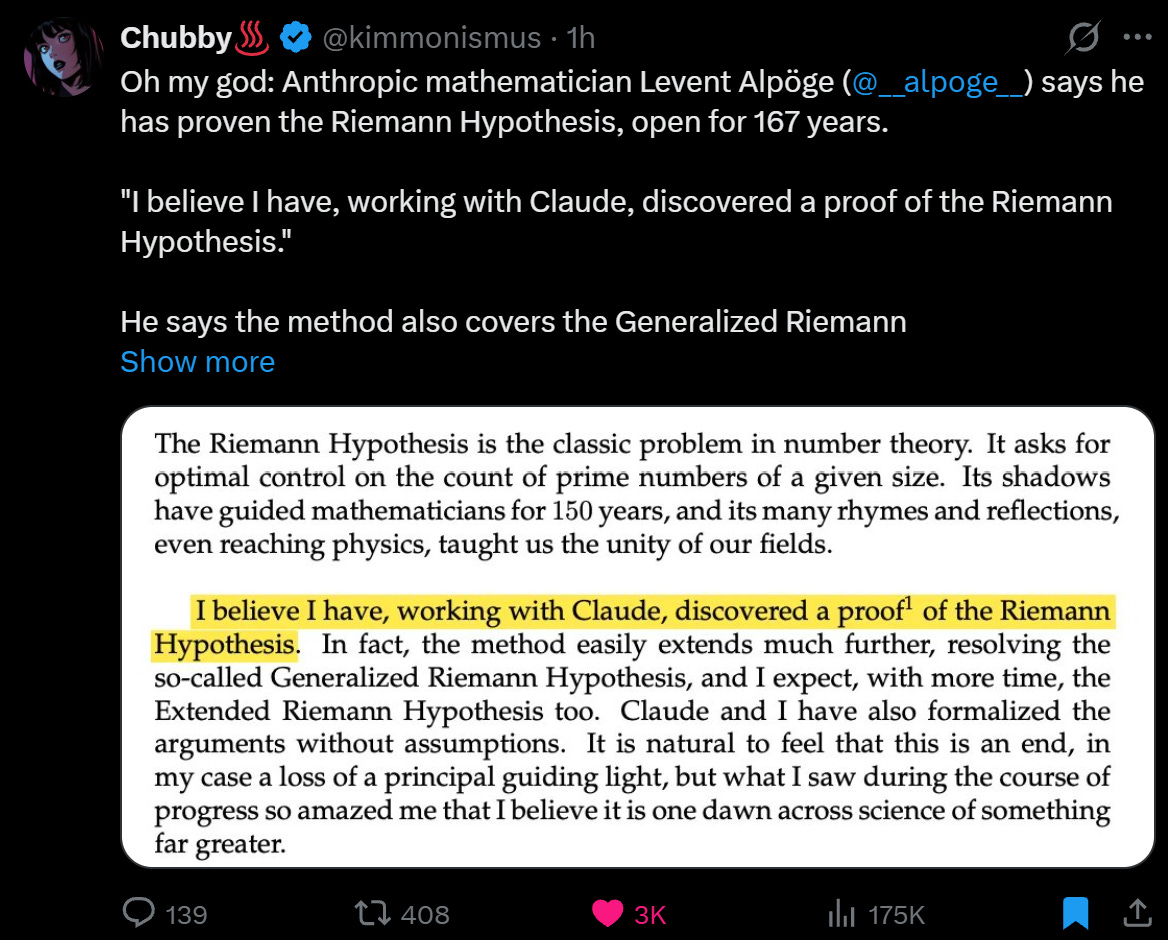
Before Riemann it was the Exponential Time Hypothesis, before that Navier–Stokes, and before that an Erdős conjecture that had been open since 1946.
The trend is clear. Better reasoning, combined with code and proof checkers, is now producing proofs of problems that had resisted mathematicians for decades.
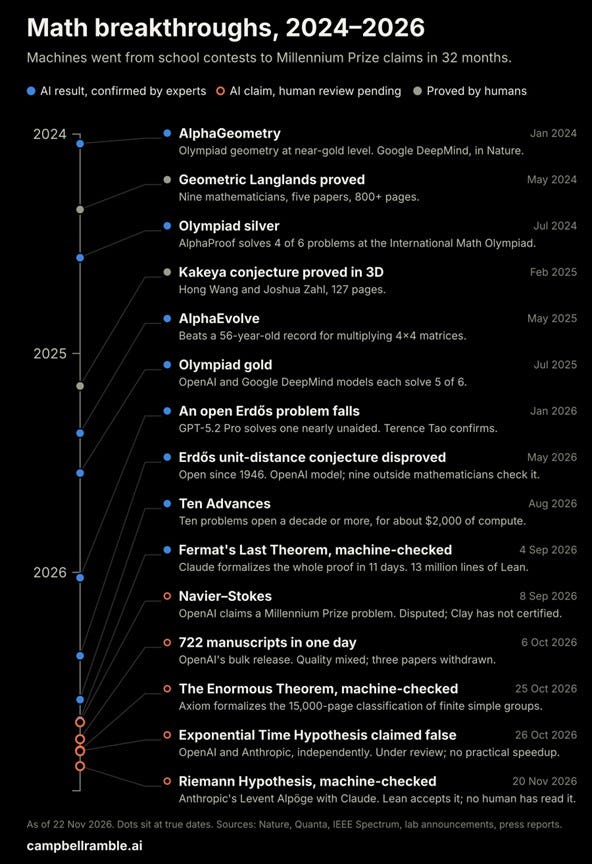
There are a lot more examples here. The Navier–Stokes problems, the Millennium problems, 722 papers in a single day. (Some of these are claims or special cases, and none has been signed off by the Clay Mathematics Institute, which pays $1 million for each Millennium problem.)
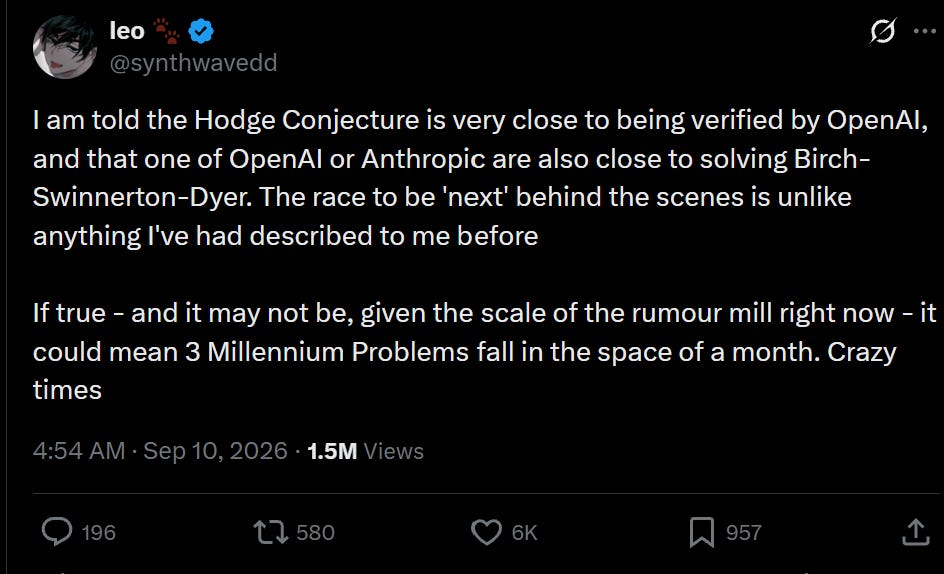
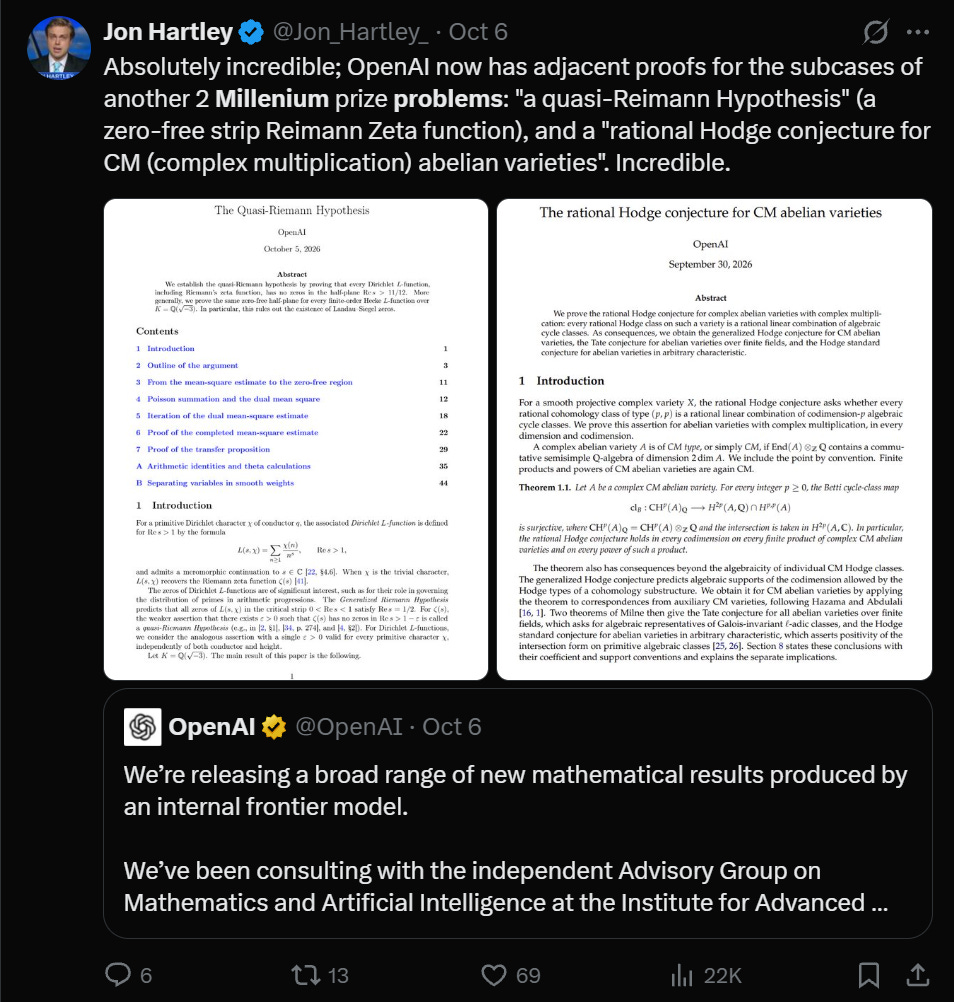
Well, so what?
Who cares?
Or, as ‘powerbottomdad1’ puts it:
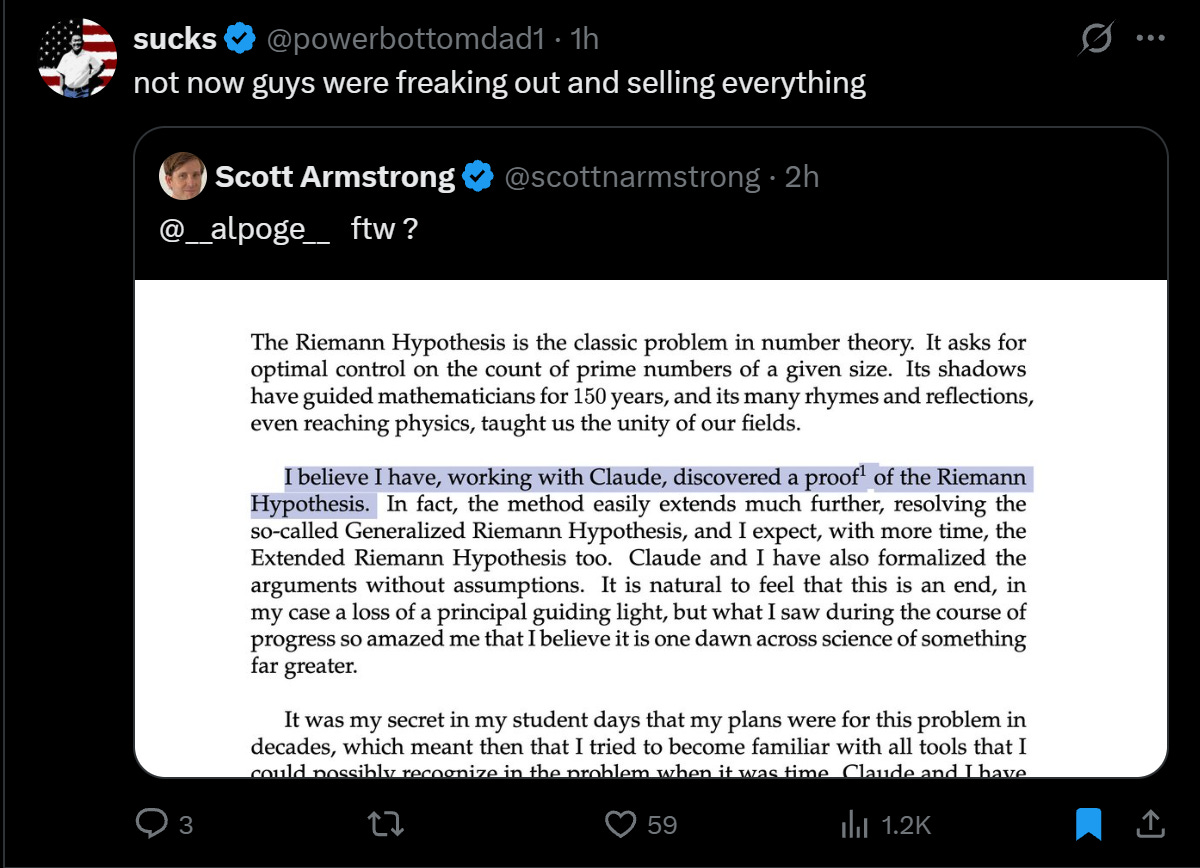
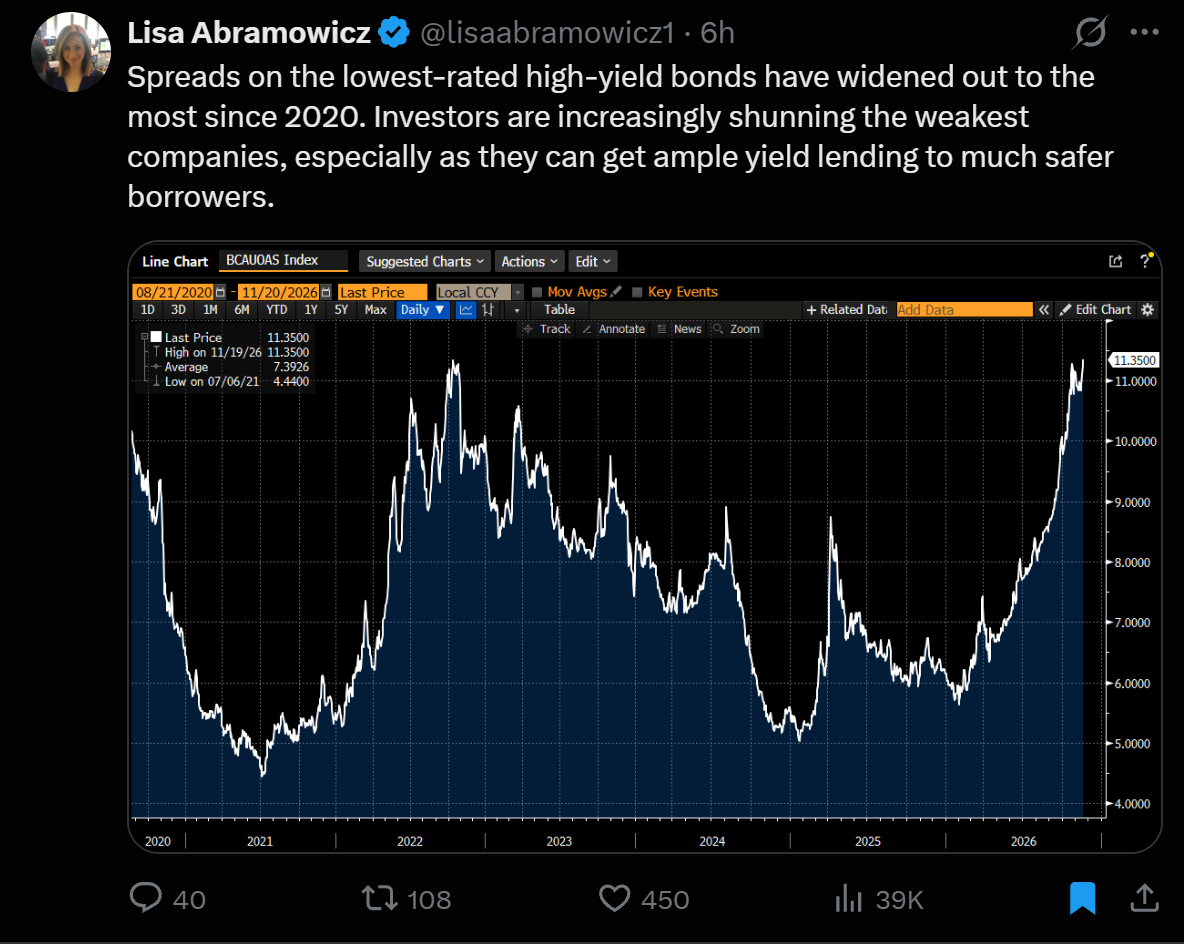
Which is a joke, but surprisingly relevant to investors today, as credit spreads continue to widen, capex plans get trimmed, and Fed tightening puts downward pressure on assets of all kinds.
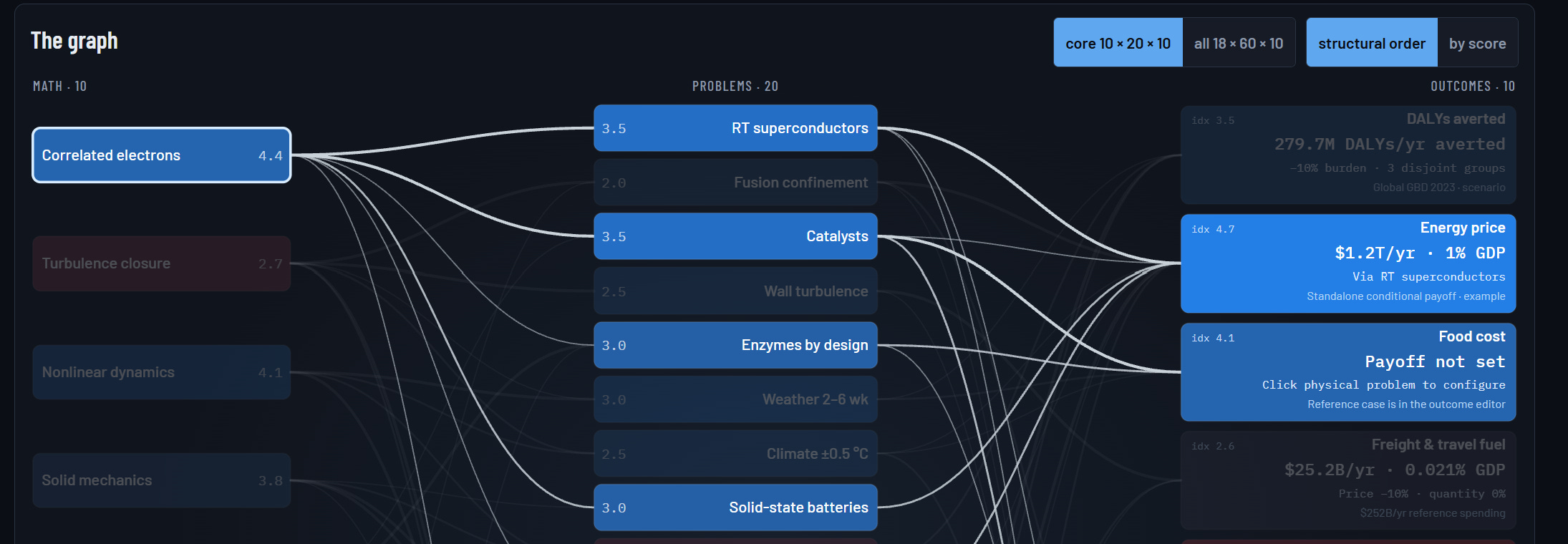
So I spent the last month off and on building a thing to answer that. A website/dashboard/model to put some grounding under the question in the back of all of our minds. If (this) math is solved, what is it worth?
Short version: at my base settings below, give the world 20 years and you get about $3.6 trillion a year in savings and 280 million additional healthy years of life, every year. Which is real money, but only about 3% of the world economy..
Before the numbers though, we need to talk about chess.
Couple of years ago I got ratio’d on X/Twitter for a different joke, this time about chess.
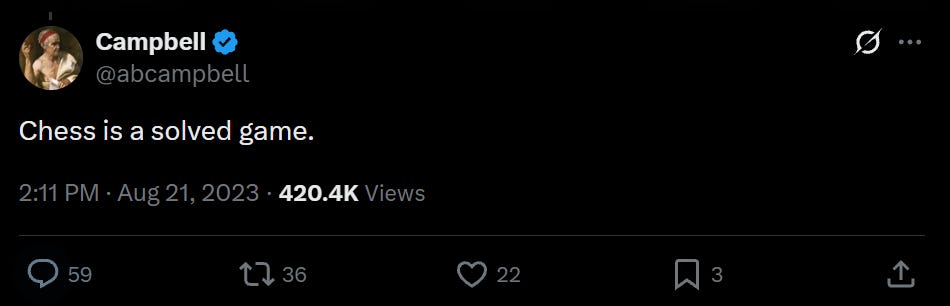
At the time, 50+ comments calling you an idiot kinda felt like a lot.
By far there were two types of comment:

Some combo of appeal to authority/ad hominem
Some rebuttal by example - a place where uncertainty still lay in the game
To me these looked like two forms of the same response, which is to debate what ‘solved’ really means.
Both crowds were picturing the same thing when they heard ‘solved’: a gigantic rule book with the perfect move for every board state.
Chess is not solved in that way and probably never will be. There is simply too much board state.
No, when I say solved, I mean that enough (!) is known about the game, by all of humanity, that the knowledge can be condensed down to a small program (which runs on your phone, deterministically I might add!) which can destroy even the world’s best player:
“I find playing against computers depressing. I don’t like losing.”
Source: Churchill Club interview, Jan 2014
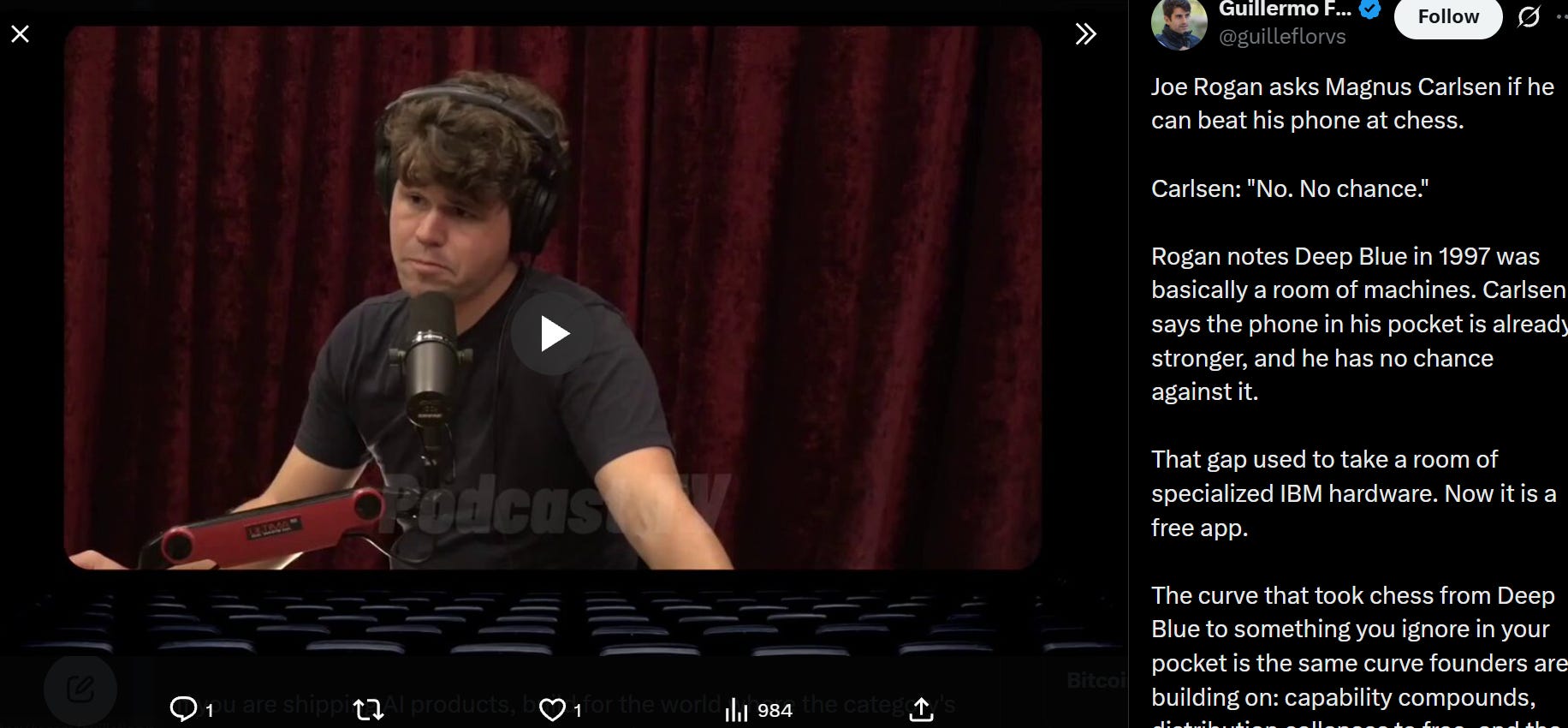
So yes, there may be sub games where humans still find enjoyment, and this is by no means an insult to those humans, they are all extremely smart. But for me, a game becomes less interesting once the best available play is beyond us. Same intuition as why an expansion pack to Catan or Dominion breathes new enjoyment into an old favorite. It is the new wrinkles on the way to figuring out the new version of the game which bring us flow.
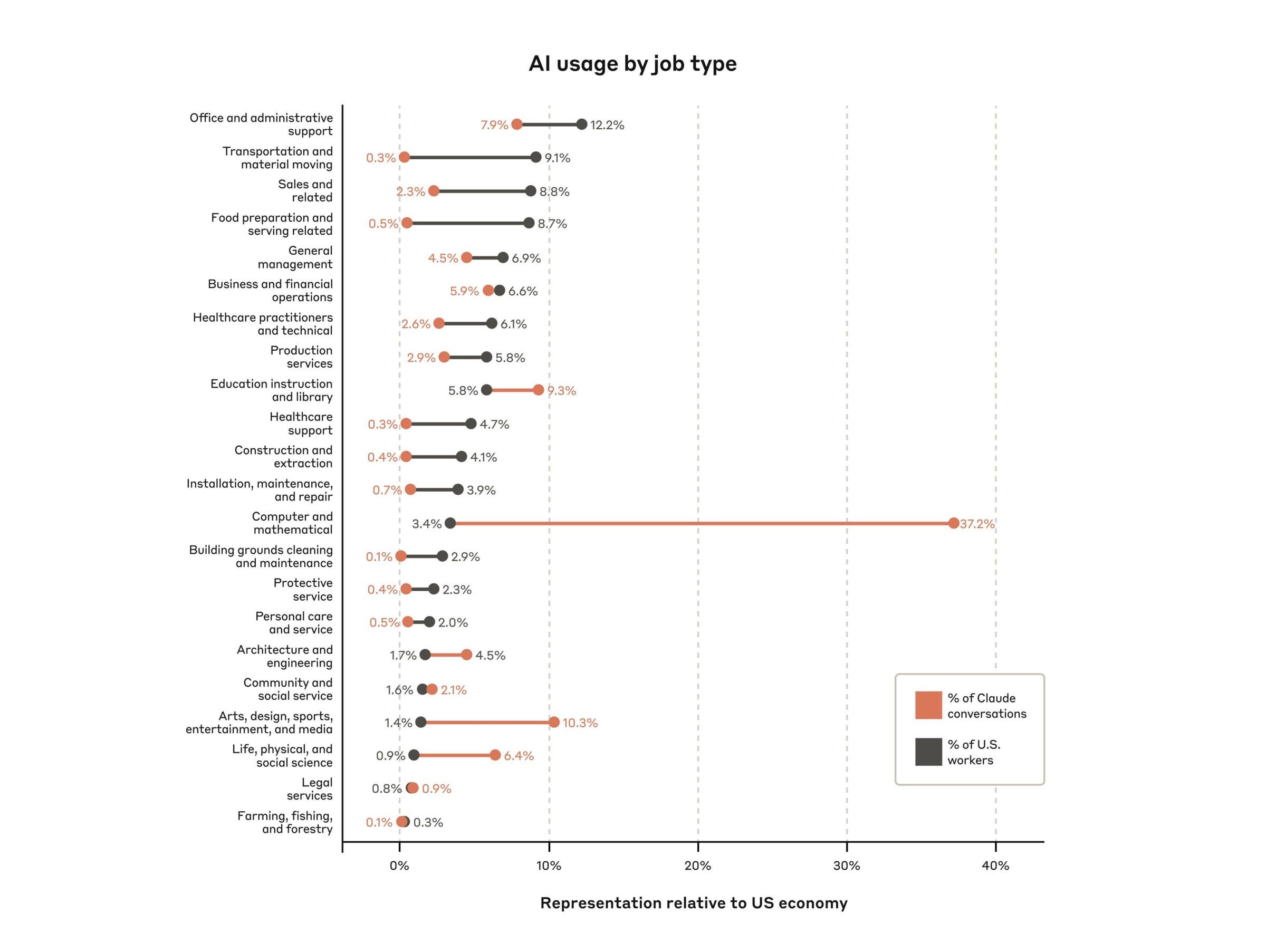
This, whether we like it or not, brings us back to math. Which, turns out, provides exactly the formal, structured, non-Knightian uncertainty type environment that we’ve trained machines to optimize. In retrospect, they are going to look at this chart from a year or so ago from Anthropic on their AI usage as the canary in the mathematical mine.
Which, as you have become accustomed to by now, is a long way for me to say that when I say math is solved, I mean it the chess way: machines now find proofs that eluded the best of us for decades. Plenty of theorems are still out there and we can assume that solving the known ones leads to better questions, which should be a simple extension of Gödel for anyone who has been paying attention to the ramble or my tweets for the past half a decade.
And yes, the same two comments are already showing up: Clay hasn't paid out, and nobody has read the Riemann proof (though the Lean and Mathlib communities checked it anyway and certified it on November 21). Fair enough. Magnus still can't beat his phone.
So what is it worth
As a (quasi) professional speculator, all this hubbub is fascinating but also relevant to my job. Given the fact that ‘AGI pilled’ folks have been by and large right for the past five years, it raises the question: ok, so what if math IS solved. Who cares? What happens?
This question has been in the back of my mind, and one of my research threads, for the past month or so. Since Navier–Stokes it has been clear the list was going to fall faster than anyone could read the proofs.
So what is all of this worth?
Almost impossible to estimate.
How much is an equation worth?
How about its solution?
But we can try.
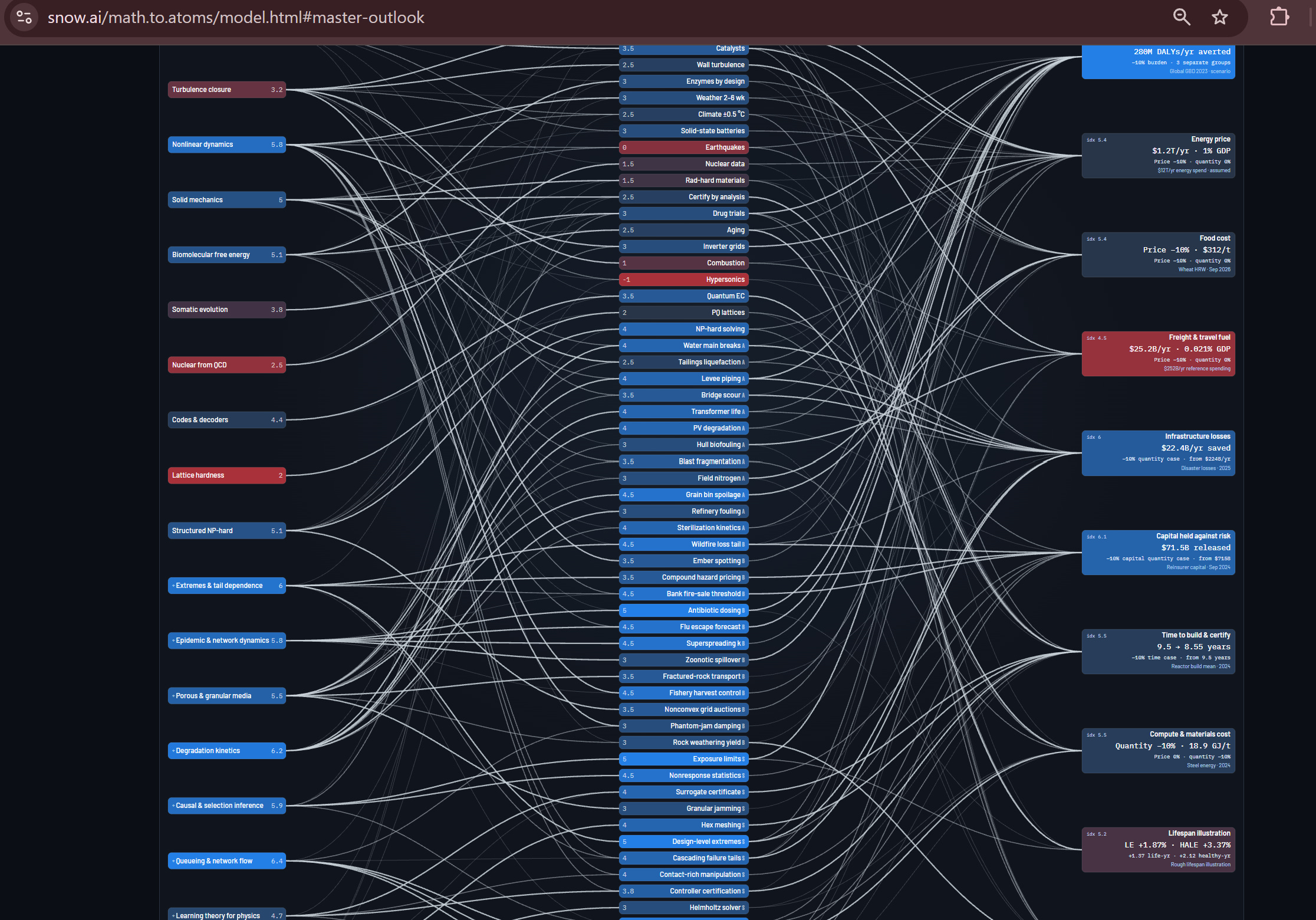
Map the math to the problems it unlocks.
Then think through which problems unlock which consequences in the material, human world, in terms of dollars, time saved, and healthy life-years (DALYs, disability adjusted life years).
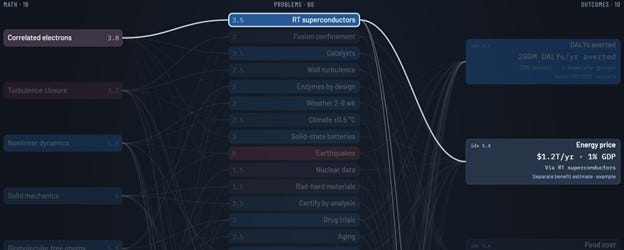
Math fields on the left, the physical problems they could help with in the middle, tangible outcomes on the right, all scored on my 1 to 10 log scale (each point is 3x, and today’s math and today’s physical capability both sit at 3). Two things come out of it, and they’re easy to mix up: a ranking of what’s worth working on next, and a separate set of dollar and health totals. It lives here:
Every score and every edge is editable, so if you think I’m an idiot, at least now you can show your work.
The numbers
I ran it at what I think are sane defaults: math reaches half of the costs and illness counted here, half of that gets used, and where it’s used things get 40% better. Multiply it out and that’s a 10% change, phased in evenly from 2026 to 2046. It’s a scenario I picked, so read the totals as what I can see and count today, before anything nobody has invented yet (which would push them up) and before the cost of putting any of it to work (which pulls them down).
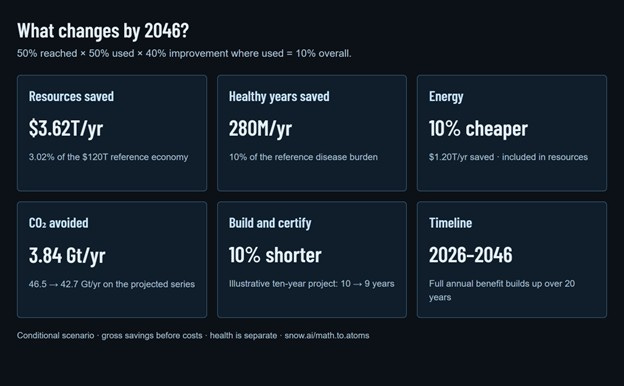
$3.62 trillion a year in resources saved and losses avoided, about 3% of the model's $120 trillion reference economy. (Google says 2026 world GDP is more like $128 trillion fwiw.)
280 million healthy years of life saved every year, 10% of the model’s disease burden.
3.84 billion tonnes of CO₂ a year avoided (10% of the energy-related 38.4 billion), taking the projected 2046 path from 46.5 down to 42.7 billion.
10% less time to build and certify things: an illustrative ten-year project takes nine.
Is it really the case that solving all of this math does nothing?
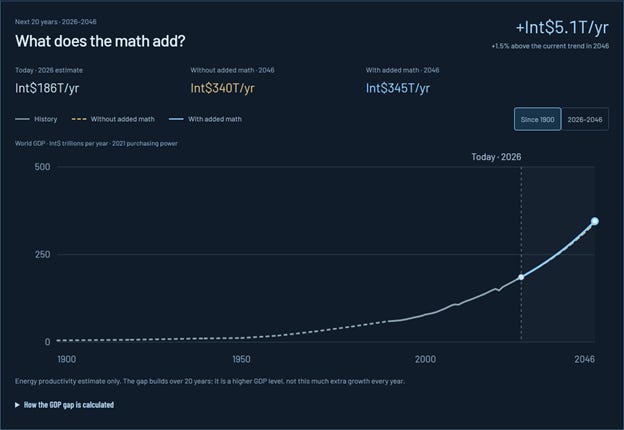
Well, yes, if all you look at is the GDP chart. That chart counts one channel, what cheaper energy does to productivity, and on it world GDP in 2046 goes from $340 trillion to $345 trillion (2021 purchasing-power dollars), about 1.5% higher. At about 3% baseline growth, that's roughly six months. Which is kinda underwhelming for the biggest mathematical event of my lifetime, even if it leaves out most of the good stuff.
In my defense, I only let it reach half, and I only count savings on things we already do (Maxwell’s payoff was radio, which nobody in 1865 would have put in a spreadsheet). And don't mix up the two percentages. The $3.62 trillion measures annual savings against a modeled $120 trillion global economy; the separate GDP chart counts only energy’s productivity effect, which adds 1.5% to the larger 2046 economy.
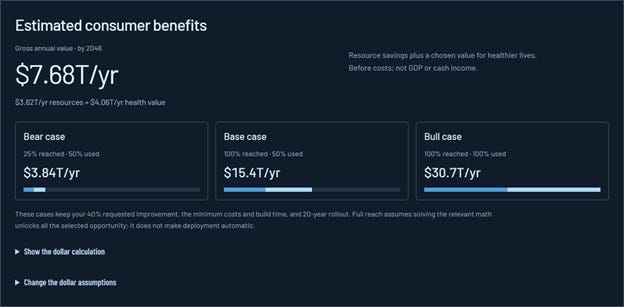
If you want one big number, put a price on health ($14,500 per healthy year, my assumption, and not cash anybody gets paid) and add it to the savings: $7.7 trillion a year at my defaults. Crank reach all the way up and it’s $15.4 trillion with half used, or $30.7 trillion if everything gets used.
Is it really only energy?

No. Energy is $1.2 trillion of the $3.62 trillion, about a third. Other production and logistics is twice that at $2.4 trillion, and avoided disaster losses are a rounding error at $22 billion. I treat the three as separate pots.
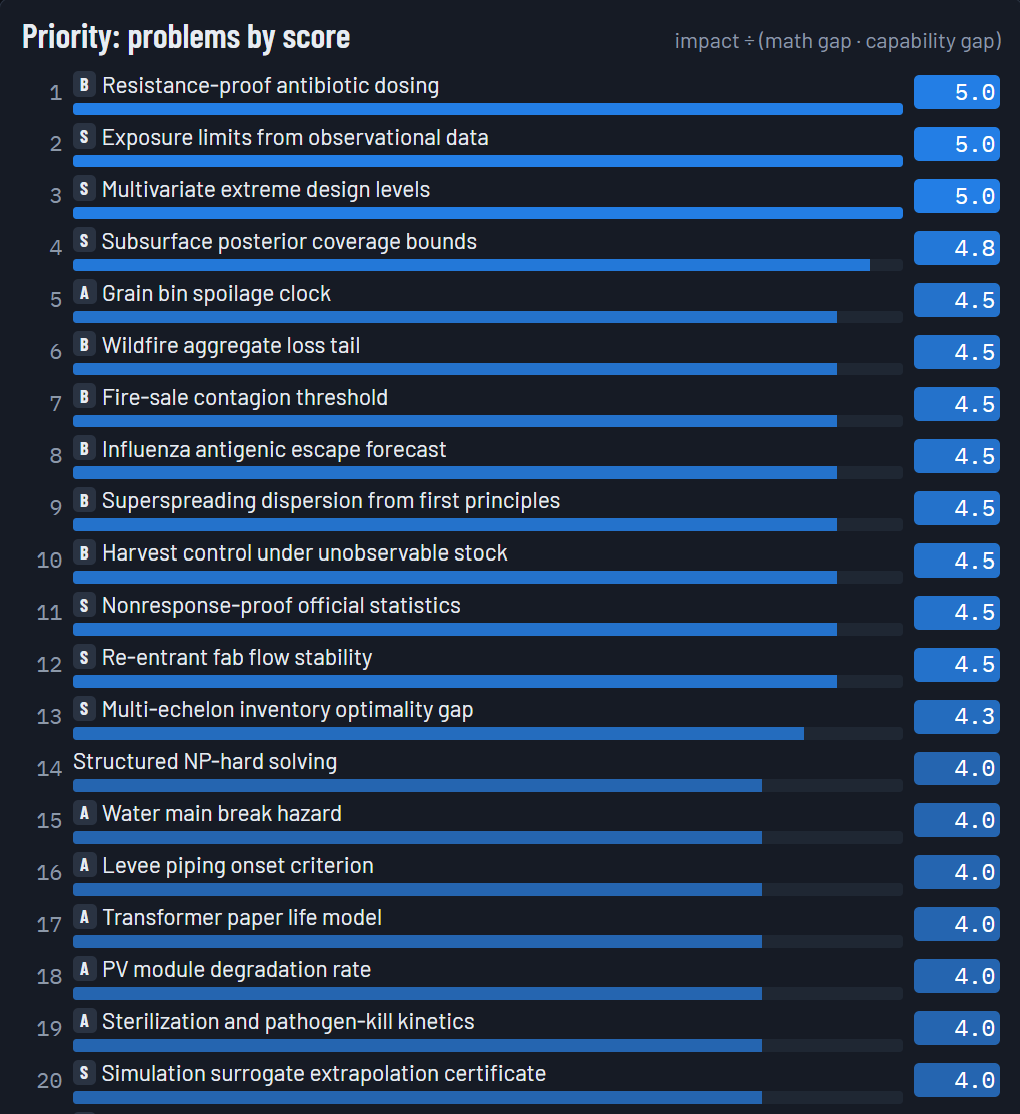
Which brings me to the part I got wrong. Rank the problems by impact and you get exactly the list I’d have bet on going in: room-temperature superconductors, aging, catalysts, drugs that don’t fail late, fusion.
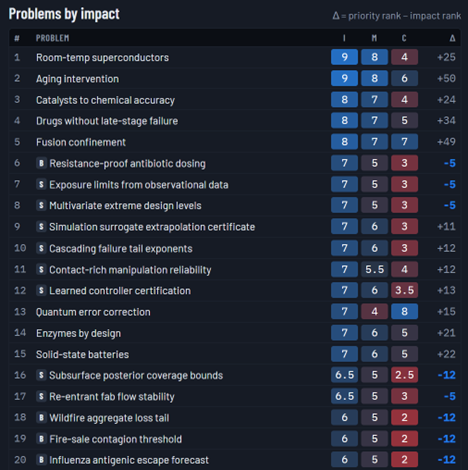
Now rank them by what's actually worth working on next, which knocks each one down for how much math and how much hardware it still needs. Fusion drops to 54th and aging to 52nd, and even superconductors only make 26th. What rises to the top is stuff like antibiotic dosing, exposure limits, when a grain bin (the big steel silos on farms) spoils, and how fat the tail on wildfire losses is.
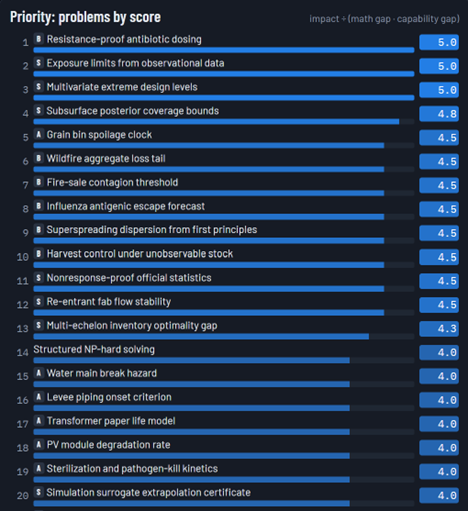
So the stuff worth working on next turns out to be insurance tails and grain bins, where the math is nearly done and the atoms already exist, which is the opposite of where I went looking. They're the pedestrian, universal problems that hit a lot of people a little bit. Unless we're missing something, which almost by definition we are, and that's kind of the point.
Where is Riemann on the list?
The Riemann Hypothesis (1859) says the primes are spread out about as evenly as they possibly can be. Thousands of papers start with “assume Riemann,” so a proof turns them all into real theorems. Alpöge’s landed Nov 20 as Lean code that would run 250,000 pages written out, so instead of reading it, the Lean crowd spent the weekend compiling and auditing it, and certified it Saturday. The $1 million prize can’t be paid for at least two years.
On my ledger it scores zero, with a caveat. Everything built on primes already works as if it were true, and I looked for a dollar saving I could defend assigning to the proof alone and couldn't find one. There's a real chance all this math eventually undermines cryptography in deep ways, which on current accounting would destroy value. But a) that's a topic for another Ramble, and b) it looks to be on the horizon with or without Riemann.
Which puts the gatekeepers in an awkward spot. In October the Association for Human Mathematics (yes, that's a real name) told mathematicians to stop working with OpenAI. Either this math is valuable, in which case slowing it down to protect your status is a moral failing (somebody's grain is rotting while you clutch your pearls), or it's fine to go slow because the payoff is small and there isn't much value in math anyway, in which case what exactly have we been paying you for? You don't get to have it both ways.
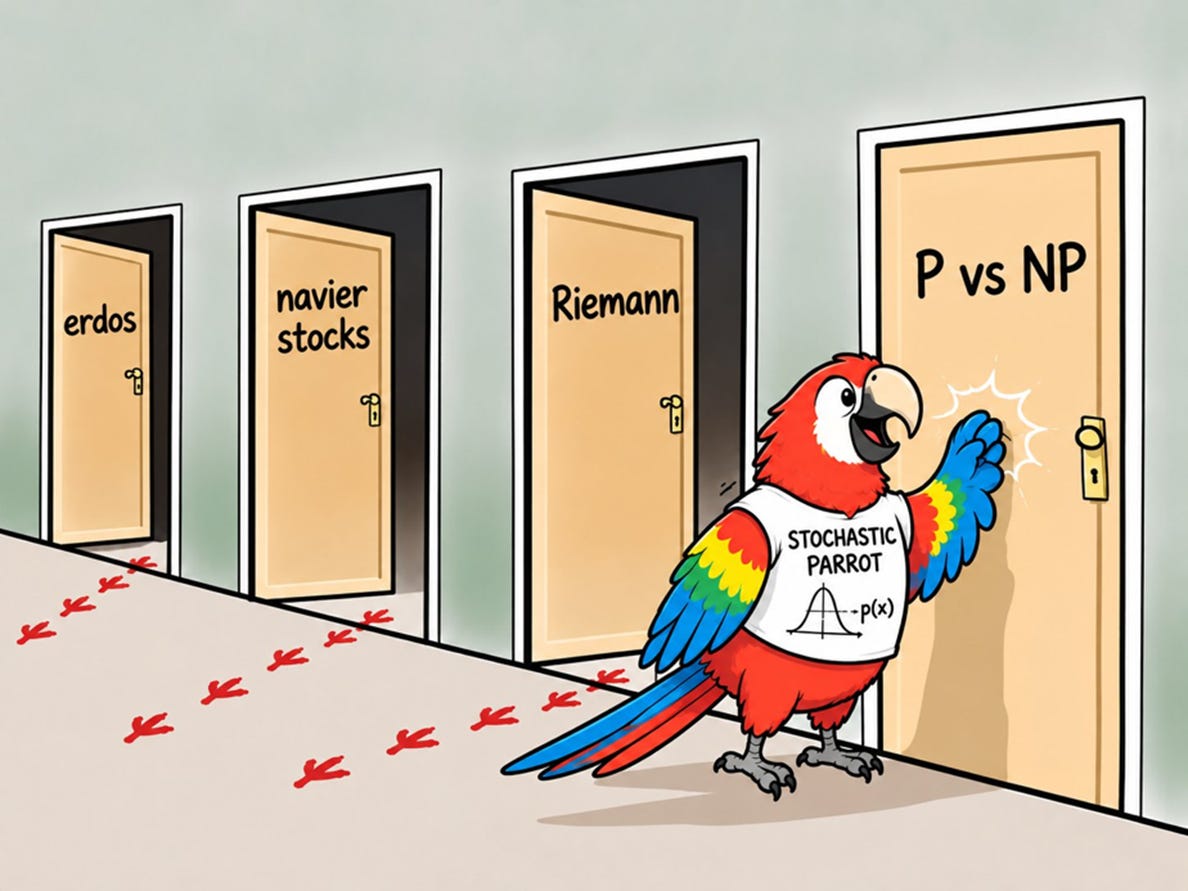
P vs NP is the next door the parrot is knocking on (literally: this weekend a guy home sick in bed pointed a fleet of AI agents at it and livestreamed the attempt).

It’s also the one Millennium problem that could obviously move the numbers, but only if the answer is P = NP and it comes with an algorithm fast enough for real inputs (P ≠ NP hands you no new solver). Then a big chunk of hard scheduling, routing and design problems get solved, and most of the public-key encryption on the internet stops working. Big plus, serious minus, and I haven’t priced either.
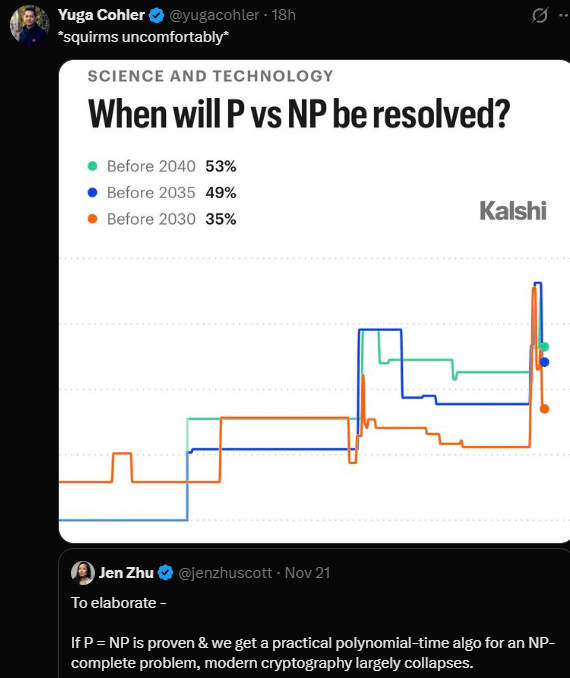
Meanwhile the boring version is already sitting at rank 14: better solvers for the messy problems real businesses actually have. Lance Fortnow, who has spent his career on this question, argues that practical progress could give us much of the upside associated with P = NP while keeping cryptography. I’ll take that trade.
Why 20 years
Because a proof tells you something is true and that’s about it. Somebody still has to pour the concrete. Maxwell’s equations took 36 years to become a radio signal across the Atlantic, quantum mechanics took about 22 to become a transistor, and compressed sensing about 11 to reach an MRI scanner, so 20 is my pick from a range that’s shrinking. Machines have cut the wait to check most proofs to minutes. A drug trial still takes years. If AI speeds that part up too, the years are a dial on the site.
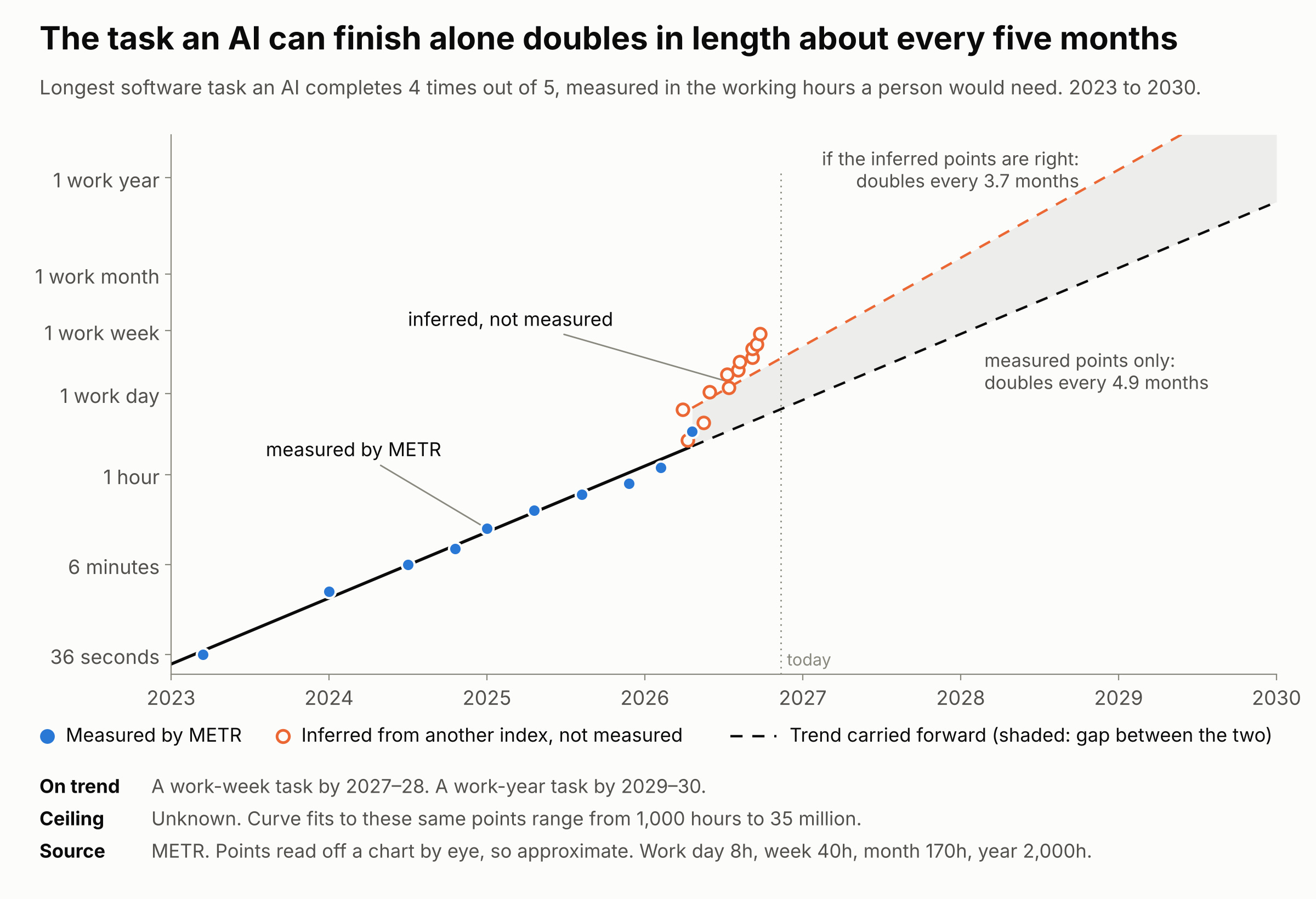
Meanwhile the bits side keeps compounding: on METR’s software tasks, the length of task an AI can finish four times out of five has been doubling about every five months.
OpenAI’s chief scientist, Jakub Pachocki, published his own version of that clock on Sunday, 22 November: how well a raw model predicts held-out code, measured by log-perplexity. He says striking math results appeared around 0.76, expects further changes around 0.68–0.70, and wants labs to agree on limits until monitoring catches up. (It’s measured on OpenAI’s own internal code, so you can’t line it up against other labs.)
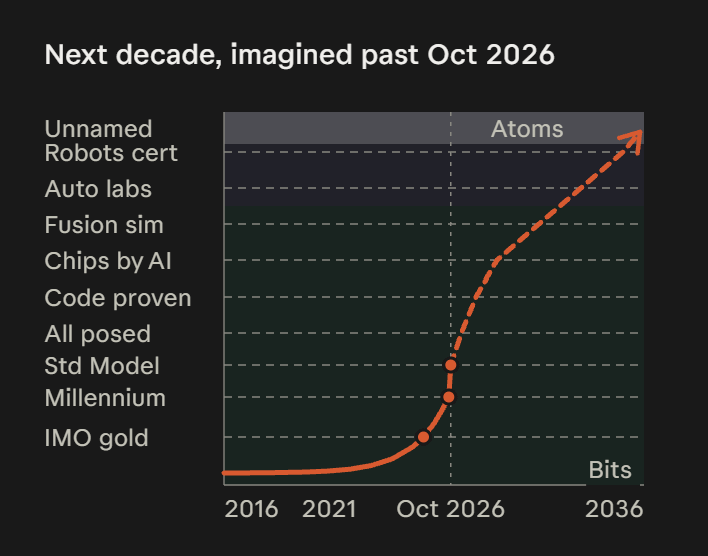
Someone on Twitter had Gemini carry OpenAI’s line forward to imagine a deeper future than just all the current problems being solved. Note the blurring of the line between math, capabilities and impact.
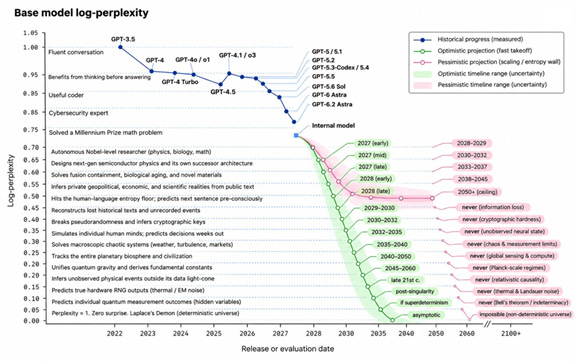
Which exposes the core assumption here: we priced a set of costs and diseases we already have, assumed how much better math could change them, and stopped the clock there.
Of course a 1.5% energy-only GDP bump looks small next to a chart promising fusion by 2027. The Gemini chart, like many doomers (as well as many AI bros raising money) deliberately conflates outcomes from problems and the underlying theoretical breakthrough that enables them. Our effort here today shows a) how hard it is to actually predict the impact this far in advance, b) the mechanisms by which it could transmit, and c) some attempt to estimate what those real world outcomes would be. And as you see, it’s kinda a mess.
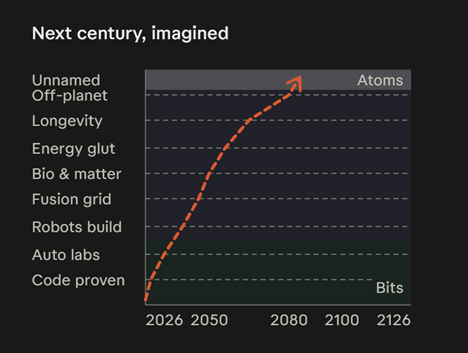
Here’s my own (equally made up) version:
Interestingly enough Noah Smith recently asked a version of the same question as we were writing:

Not now guys
Which brings me back to the original SF vs NY question. If our assumptions are anywhere close, the payoff is large here, but it shows up over decades, mostly as lower costs and healthier lives, and nothing in my ledger says who gets paid for it. A high-yield borrower’s refinancing wall arrives in quarters. So the market dumping everything the week a Riemann proof is announced isn’t dumb, it’s just telling you about the nature of capital markets.
As we wrote back in 2015, the market is good at pricing risk and bad at weighing uncertainty. The future of math looks as uncertain as the future of any major complex subject. A lot of things that used to be hard are now a matter of moving enough electrons through enough sand. I for one, think that’s a good thing. In the short term it’s no respite to neoclouds looking to roll their debt, but it ought to give you confidence that yes, these tokens can have deep value.
Till next time.
Appendix: using the ledger
Go through some examples yourself. The map has 18 applied math fields plus one Riemann reference entry, 60 physical problems and 10 outcomes. Click a math field to follow its connections: correlated electrons to room-temperature superconductors to the price of energy.